



Raspberries are one of those fruits that seem almost too good to be true as a dog treat, low in sugar, packed with fiber, and full of antioxidants people rave about for their own health. The good news is that yes, dogs can eat raspberries, and in moderate amounts they actually offer some genuine nutritional benefits backed by real research.
Like most fruits though, raspberries come with a few things worth knowing before you start tossing them into the food bowl. Portion size matters more than you'd think, and there's one specific compound in raspberries that deserves a closer look, especially for certain dogs.
Can Dogs Eat Raspberries: The Nutritional Upside
Raspberries aren't just a low-calorie snack. They contain a genuinely impressive concentration of compounds that support cellular health, and the research behind this isn't limited to human studies anymore.
The Antioxidants Doing the Real Work
A peer-reviewed study published by the National Institutes of Health examined the phenolic compounds found in raspberries, specifically flavonoids, anthocyanins, and ellagic acid. The research found these compounds actively scavenge free radicals and inhibit inflammatory markers at the cellular level. Free radicals are unstable molecules that contribute to cellular aging and tissue damage over time, and antioxidants like these help neutralize them before they cause harm.
For dogs, this translates into potential support for joint health, skin condition, and overall cellular resilience, particularly in senior dogs who deal with more accumulated oxidative stress as they age. The anthocyanins responsible for the raspberry's deep red color are the same compounds researchers have linked to anti-inflammatory effects across multiple studies.
How Plant Antioxidants Apply Specifically to Dogs
It's one thing to know antioxidants work well in general biology, but does that actually translate to canine health specifically? A separate peer-reviewed evaluation in PMC investigated dietary polyphenols and plant-based antioxidants, including those found in berries, and their physiological benefits within canine metabolic health specifically. The research pointed to measurable support for metabolic function and reduced markers of oxidative stress when these compounds were incorporated into a dog's diet in appropriate amounts.
This matters because not every human superfood translates well to canine biology. Raspberries appear to be one of the exceptions where the benefits genuinely carry over, provided the fruit is given plain and in reasonable portions.
Gut Health Benefits Worth Knowing About
Beyond the antioxidant angle, raspberries offer something else that's easy to overlook: real support for digestive health, thanks largely to their fiber content and phenolic profile working together.
Academic research published in PMC evaluated how fruit-derived phenolic compounds help reduce cellular oxidative damage while also supporting gut lining integrity in animal models. Raspberries are naturally high in dietary fiber, which supports healthy digestion and can help regulate bowel movements in dogs prone to occasional constipation or irregular stool. Combined with the anti-inflammatory properties already discussed, this makes raspberries a genuinely useful occasional addition for dogs with mild digestive sensitivity, not just a novelty treat.
That said, fiber cuts both ways. Too much of it too quickly can cause loose stool or gas, which brings us to the portion question.
How Many Raspberries Can Dogs Actually Eat
Moderation really is the operative word here. A small dog should stick to just a few raspberries at a time, maybe two or three. Medium to large dogs can handle a slightly larger handful, somewhere around 5 to 10 berries, without issue. Treats, raspberries included, should never make up more than about 10 percent of a dog's daily caloric intake.
A few practical guidelines to keep in mind:
-
Always wash raspberries thoroughly before offering them
-
Start with just one or two berries the first time to check for any digestive reaction
-
Avoid raspberry products with added sugar, syrup, or artificial sweeteners
-
Skip frozen raspberries with added coatings or flavorings
-
Never offer raspberries as a meal replacement, only as an occasional treat
One thing worth flagging: raspberries do contain small, naturally occurring amounts of xylitol, far less than what's found in processed sugar-free products, but present nonetheless. This is generally not a concern in the small quantities dogs would realistically eat from fresh raspberries, but it's a good reason to stick with moderate portions rather than letting your dog snack freely from a full container.
Which Dogs Should Be More Cautious
Most healthy adult dogs tolerate raspberries just fine in small amounts. A few groups warrant extra caution though. Dogs with diabetes or blood sugar regulation issues should only have raspberries under veterinary guidance, since even natural sugars can affect glucose levels. Dogs with a known sensitivity to fructose or a history of digestive upset from fruit in general may do better avoiding raspberries altogether or trying a much smaller test portion first.
If your dog has never had raspberries before, watch for any signs of an upset stomach over the following 24 hours, including vomiting, diarrhea, or unusual lethargy. These reactions are uncommon but worth monitoring for with any new food introduction.
Simple Ways to Offer Raspberries
Fresh, plain raspberries work well as a standalone treat, tossed into a food puzzle for enrichment, or lightly mashed and mixed into plain yogurt as a special addition to mealtime. Frozen raspberries, plain with nothing added, can also make a refreshing warm-weather treat, though they should still be offered in the same small portions as fresh ones.
Rounding Out Your Dog's Antioxidant Support
If you're drawn to raspberries because of their antioxidant profile, it's worth knowing that consistent, daily antioxidant support tends to matter more than occasional fruit treats alone. WagWell formulates products with this kind of ongoing support in mind rather than relying on sporadic snacks to do the heavy lifting.
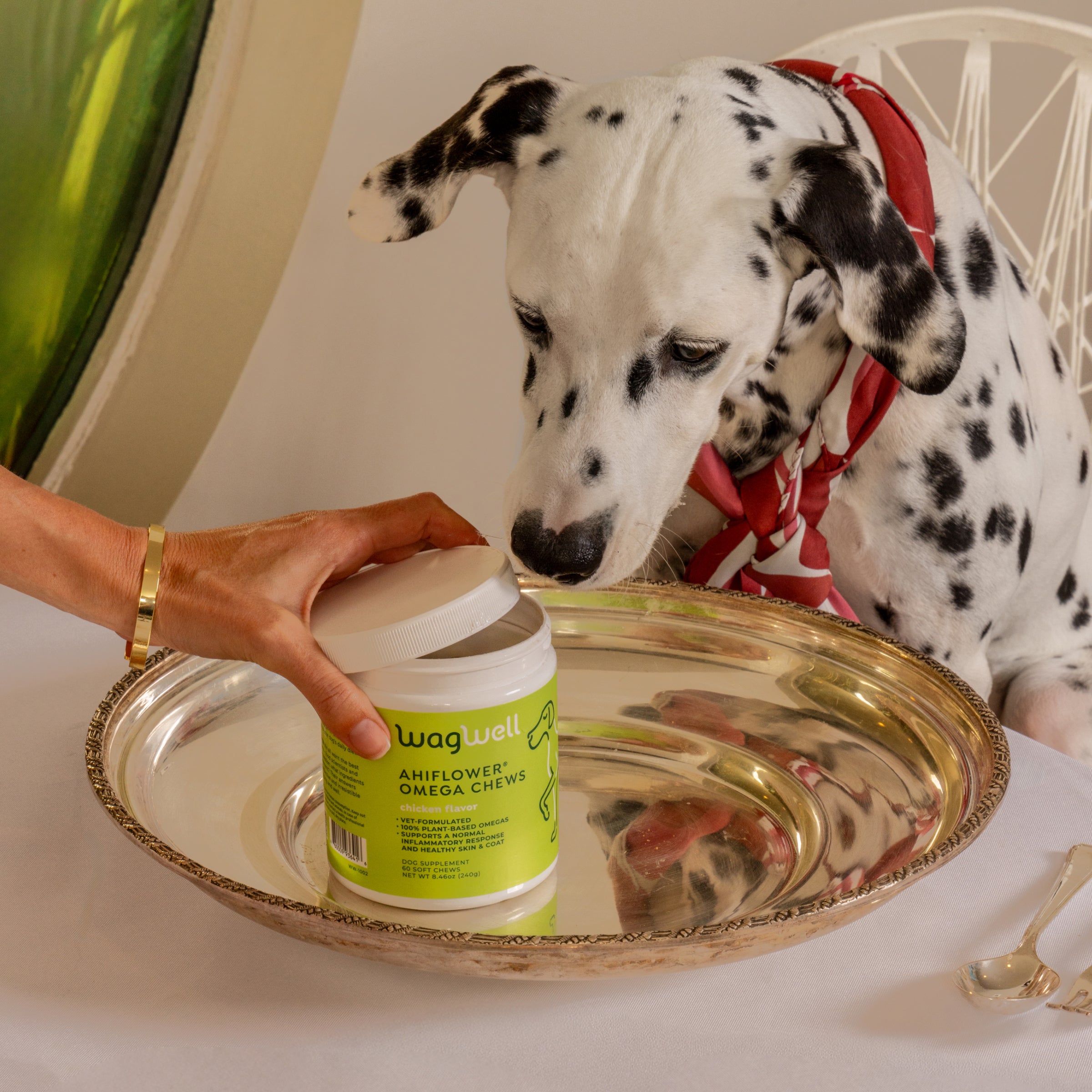
Ahiflower Omega Oil provides plant-based omega fatty acids that work alongside antioxidants like those in raspberries to support skin barrier health and reduce inflammation from the inside out. For senior dogs dealing with the joint stiffness that oxidative stress can contribute to over time, mobility chews combine joint-supporting ingredients with anti-inflammatory compounds for more consistent, daily support than an occasional berry can offer on its own. And for dogs whose digestive sensitivity makes fiber-rich treats a bit of a gamble, dog natural supplements built around gut health can help create a more stable foundation before introducing new fruits at all.
The Bottom Line on Raspberries
Yes, dogs can eat raspberries, and in moderate amounts, they offer real antioxidant and digestive benefits backed by genuine research rather than just wellness trends. Keep portions small, skip anything with added sugar or sweeteners, and watch for any digestive reaction the first time you offer them. Used thoughtfully, raspberries are one of the rare human fruits where the hype and the science actually line up.
Sources:
Antioxidant, Anti-Inflammatory, and Cytotoxic Activity of Phenolic Compounds in Raspberries.
Roles of Plant-Based Ingredients and Phytonutrients in Canine Nutrition.
Evaluation of Natural Antioxidants and Anti-Inflammatory Properties in Fruit Extracts.
Recent Articles


