



Learning how to make dog food at home appeals to many pet parents. They want fresh ingredients, full transparency, and control over what goes into their dog's bowl. Those are legitimate goals. The challenge is that making dog food safely requires more than good intentions and wholesome ingredients. It requires nutritional precision that most recipes available online completely fail to deliver.
This guide covers what the research actually shows. It explains the risks, outlines what a properly formulated homemade diet looks like, and helps you make genuinely informed decisions.
How to Make Dog Food Safely: What the Research Shows
The gap between a healthy-sounding recipe and a nutritionally complete one is enormous. Understanding that gap is the starting point for any responsible homemade feeding approach.
The 95 Percent Problem
Researchers at UC Davis School of Veterinary Medicine conducted the largest nutritional evaluation of homemade dog food recipes ever published. They analyzed 200 recipes from websites, pet care books, and veterinary textbooks. The results were striking. 95 percent of the recipes were deficient in at least one essential nutrient. More than 83 percent had multiple deficiencies.
Even recipes written by general-practice veterinarians had problems. Only four recipes in the entire sample, all written by board-certified veterinary nutritionists, met acceptable nutrient profiles for adult dogs. The most common deficiencies included choline, vitamin D, zinc, and vitamin E. Each of those gaps carries real health consequences. Choline deficiency causes fat to accumulate in the liver. Zinc deficiency impairs immune function. Vitamin D deficiency leads to musculoskeletal abnormalities.
The study specifically noted that rotating between different homemade recipes does not fix the problem. When multiple recipes share the same deficiencies, rotating through them simply means your dog gets the same gaps delivered in different combinations.
When Homemade Diets Do Work
The research also shows that properly formulated homemade diets produce measurable health benefits. A prospective clinical study published in PMC followed 167 dogs placed on customized, professionally balanced homemade diets over a median follow-up period of 14 months.
The results were encouraging. Dogs with chronic gastrointestinal conditions improved in 95 percent of cases. Those with dermatological conditions improved in 83 percent of cases. Dogs with both conditions improved in 100 percent of cases. Among healthy dogs who stayed on the plan, 70 percent showed improvements in coat condition. Coats became shinier and softer over time.
The key phrase in all of these results is professionally balanced. None of this data applies to random recipes found online. It applies specifically to diets formulated by trained veterinary nutritionists for individual dogs.
How to Make Dog Food: The Nutritional Framework
A nutritionally complete homemade diet for a dog requires far more than protein, vegetables, and grain. Dogs need approximately 40 essential nutrients in specific amounts and ratios.
What Every Homemade Diet Must Include
According to the UC Davis Veterinary Nutrition Support Service, these categories of nutrients need to be accounted for in any homemade recipe:
-
A complete protein source such as chicken, turkey, beef, or fish
-
Essential fatty acids including linoleic acid from appropriate fat sources
-
Calcium in a specific ratio to phosphorus
-
Vitamins A, D, E, B12, and B-complex in correct amounts
-
Trace minerals including zinc, copper, iodine, and selenium
-
Choline, which few ingredients naturally provide in adequate amounts
Most whole food ingredients alone cannot hit these targets. That is why professionally formulated homemade diets almost always include a precisely calibrated vitamin and mineral supplement designed specifically for dogs eating home-cooked food. These are separate products from generic dog vitamins and require correct pairing with a specific recipe to work as intended.
What to Avoid Entirely
UC Davis guidance strongly warns against raw diets. Raw meat carries bacterial contamination risks from Salmonella, Listeria, and E. coli. These pathogens pose health risks for dogs and for humans who handle the food or surfaces where it is prepared. Thoroughly cooking all protein sources eliminates this risk category.
Several human foods are also toxic to dogs and must never appear in a homemade recipe:
-
Grapes and raisins cause kidney failure
-
Onions and garlic destroy red blood cells
-
Xylitol causes liver failure and severe hypoglycemia
-
Macadamia nuts cause neurological symptoms
-
Avocado contains persin, toxic to dogs
-
Chocolate contains theobromine, which dogs cannot metabolize safely
How to Make Dog Food: Building a Proper Recipe
Getting a safe homemade recipe requires working with a board-certified veterinary nutritionist. No exceptions.
Finding Professional Formulation Help
The American College of Veterinary Nutrition maintains a directory of board-certified specialists available at acvn.org. Several online services connect dog owners with credentialed nutritionists who formulate personalized recipes remotely. These services account for your dog's specific weight, age, health status, and any dietary restrictions. The resulting recipe is complete and balanced to AAFCO nutrient standards for your dog's specific life stage.
Tufts University's Cummings School of Veterinary Medicine offers a similar service. Balance.It is a veterinary-developed recipe-building platform that pairs specific supplement products with custom-formulated recipes. These resources exist precisely because the 95 percent deficiency rate documented in the UC Davis study represents real risk to real dogs.
A Safe Foundation Ingredient List
Once you have a professionally formulated recipe, most homemade diets for adult dogs draw from a similar ingredient pool. Common base ingredients that appear in properly balanced recipes include:
-
Lean cooked chicken, turkey, beef, or fish
-
Cooked white or brown rice
-
Cooked sweet potato or regular potato
-
Cooked carrots, green beans, or zucchini
-
Cooked eggs
-
A veterinary-formulated supplement to fill micronutrient gaps
Cooking temperatures matter. All poultry should reach 165 degrees Fahrenheit internally. Beef should reach 160 degrees. Never serve raw or undercooked meat regardless of how high-quality the source.
Adding Targeted Nutritional Support
A properly formulated homemade diet covers the baseline. Targeted supplements add specific support for your dog's individual health priorities.
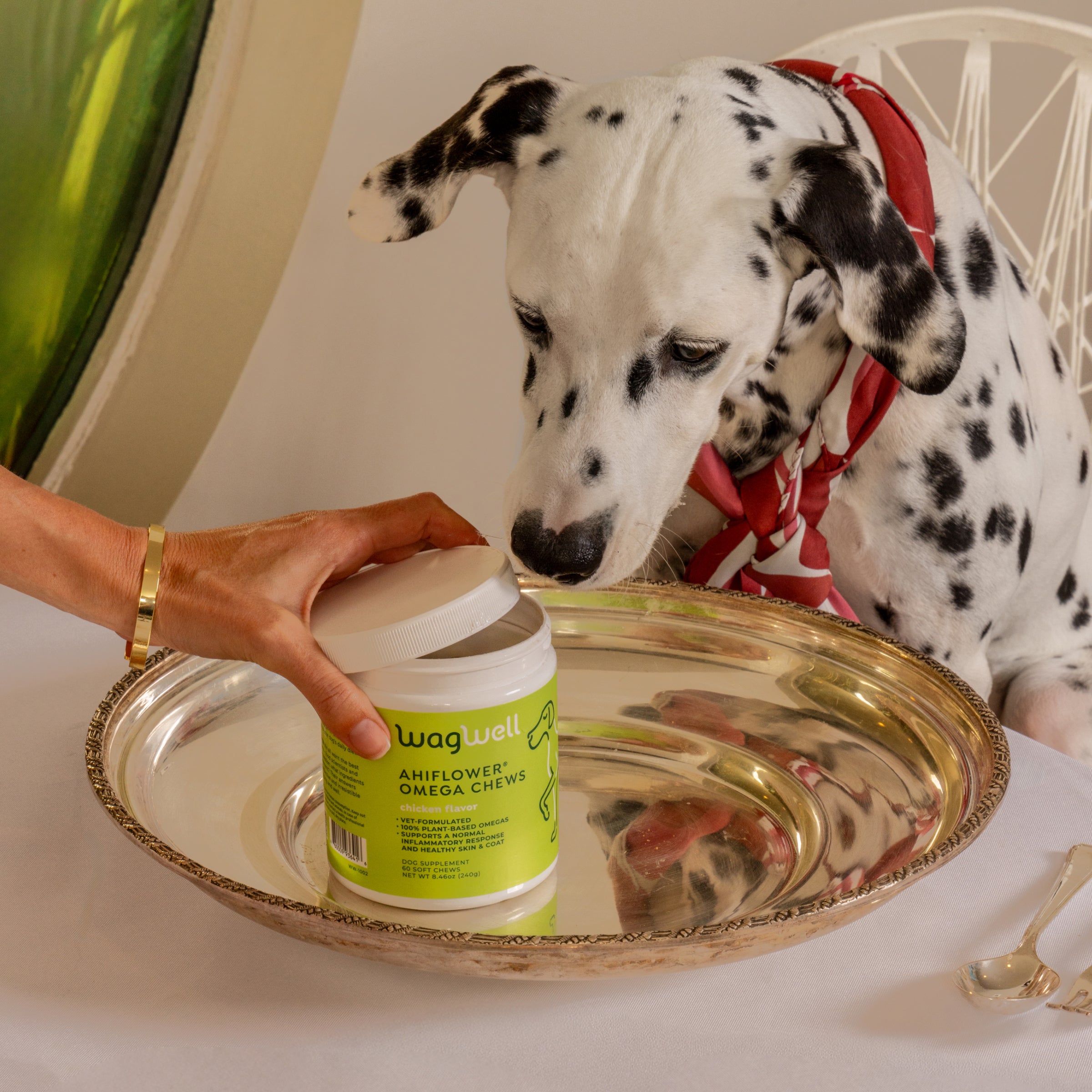
Ahiflower Omega Oil delivers plant-based omega 3, 6, and 9 fatty acids. These support skin, coat, joint, and heart health. Adding one to two pumps directly to a homemade meal rounds out essential fatty acid intake without disruption. This is particularly relevant because linoleic acid requirements, as UC Davis notes, are easy to miss in home-cooked diets without intentional fat source selection.
For dogs transitioning to homemade food who experience any digestive adjustment, Daily Cleansing Wipes keep skin comfortable during dietary shifts. Skin and coat changes are among the first external indicators that a diet is or is not working well. Monitoring these weekly gives you useful early feedback.
Dogs with specific health goals also benefit from complementary support. Joint health remains important on any diet type. Mobility Chews provide glucosamine, chondroitin, and Ahiflower omega fatty acids to support cartilage and reduce inflammation independently of the base diet.
When Homemade Feeding Makes Sense
Homemade dog food makes genuine sense in specific circumstances. Dogs with multiple food allergies or intolerances often respond better to carefully controlled home-cooked diets than to commercial alternatives. Dogs with chronic gastrointestinal or skin conditions frequently show marked improvement on properly formulated fresh food. Pet parents who need to avoid certain proteins, fillers, or preservatives gain real control through home cooking.
It makes less sense as a casual experiment or a cost-saving measure. Properly formulated homemade diets typically cost more than quality commercial food when you account for ingredients and supplementation. The time investment is also real. Batch cooking once or twice weekly keeps the process manageable, but it requires consistent commitment.
Doing It Right from the Start
How to make dog food safely comes down to one non-negotiable step: get a recipe from a board-certified veterinary nutritionist. The UC Davis data is clear. Most available recipes, even those from books written by veterinarians, fail nutritional adequacy. The PMC clinical study is equally clear. Well-balanced homemade diets produce impressive health outcomes. The difference between those two outcomes is professional formulation. Start there, pair the recipe with appropriate supplementation, cook thoroughly, and monitor your dog's coat, energy, and stool quality as consistent health feedback throughout the process.
Sources:
Homemade Dog Food Recipes: Newsletter Study Analysis
Homemade Diet as a Paramount for Dogs' Health: A Descriptive Analysis
Recent Articles


