
How to Stop Dog Shedding: 11 Things That Work (and 4 That Don't)
|
|
Time to read 8 min


|
|
Time to read 8 min
How to stop dog shedding is really a question about how to manage it, because shedding is a natural process that lets dogs replace old or damaged hair. You cannot switch it off, but the right routine can cut the amount of hair on your floor, your clothes, and your couch. This checklist covers 11 steps that help and 4 popular ideas that do not.
The 11-step checklist
Learn what normal shedding looks like
Brush on a schedule that fits the coat
Match the tool to the coat
Use the right brushing technique
Bathe sensibly, with a shedding-control shampoo
Feed a complete diet with enough protein
Add omega-3 fatty acids
Keep fresh water available
Prepare for the seasonal shed
Control parasites and treat itching early
Call your vet when shedding looks wrong
Start by knowing what normal looks like. The American Kennel Club explains that shedding is mainly triggered by changes in daylight and temperature, and that coat type plays a major role in how much a dog sheds. Dogs with thick double coats, such as Golden Retrievers, are more likely to shed year-round.
The Merck Veterinary Manual offers a simple test. If shedding is not accompanied by bald patches or symmetric hair loss, it is likely just a stage in the natural replacement of the coat. Shedding may be abnormal if it causes obvious loss of the coat and bald spots. If you are still wondering why your dog sheds so much, our guide on why is my dog shedding so much goes deeper on the causes.
These steps work best together. Brushing and bathing remove hair that has already loosened, while diet, hydration, and parasite control support the skin and coat that grow the next round.
Heavy shedding with healthy skin and an even coat is usually fine. Constant clumps, thinning, or irritated skin are not. Check the skin when you brush: it should look clean and calm, without redness, scabs, or flakes.
The AKC recommends grooming that matches coat type, length, and shedding pattern, and notes that heavy shedders may need brushing several times a week or even daily during peak periods. Use this table as a starting point:
|
Coat type |
Examples |
Best tools |
Typical schedule |
|
Short and smooth |
Beagle, Pug, German Shorthaired Pointer |
Natural-bristle brush or grooming glove |
Weekly, more often in peak season |
|
Double coat |
Golden Retriever, Pembroke Welsh Corgi |
Slicker brush, plus a coat rake or de-shedding tool in heavy shedding |
Two to three times a week, daily at peak |
|
Long coat |
Pomeranian, Collie |
Slicker brush, steel comb, mat-splitting tool |
Several times a week to daily, to prevent mats |
|
Curly or wiry |
Poodle, Schnauzer |
Slicker brush and comb |
Three to four times a week |
The frequencies for curly and wiry coats are general guidance, so ask your groomer to tailor them.
The right tool removes hair faster and protects the skin. A silicone brush such as the Fur & Body Brush has soft, flexible bristles that massage the skin and lift dead hair and dander. It works on wet or dry fur and suits all coat types. For dense undercoats, switch to a rake or de-shedding tool during the heaviest weeks.
The AKC suggests that for short coats you brush against the direction of hair growth first to loosen dead hair, then with the growth to remove it, and repeat a few times to spread natural oils. With a grooming glove, use circular motions and then smooth in the direction of growth. With longer coats, work in the direction of hair growth, use gentle pressure with bladed tools, and remove tangles with a steel comb or mat-splitting tool before brushing further.
The AKC notes that bathing with a shedding-control shampoo can help remove loose hair and maintain coat condition. Most healthy dogs do well with a bath every four to eight weeks, depending on coat, activity, and skin. Brush before the bath, rinse thoroughly, and follow your vet's advice if your dog has a skin condition.
Hair is mostly protein, and the Merck Veterinary Manual lists nutritional deficiencies, particularly protein deficiencies, among the problems that can slow hair follicle growth. A complete and balanced food that suits your dog's life stage covers the basics.
Omega-3s support the skin barrier and coat quality, but it helps to be clear about what the evidence shows. A randomized, double-blind, placebo-controlled trial published in Prostaglandins, Leukotrienes and Essential Fatty Acids followed 26 dogs with poor-quality coats. The treated dogs received an average of about 20 mg per kilogram of EPA and DHA daily for 90 days. Their combined coat and skin scores improved significantly from day 60, with the best results after about two months. The benefit held for one month after the supplement stopped and then faded back to baseline. No vomiting or diarrhea was reported.
That trial was small, partly funded by the supplement's maker, and used fish oil. It measured coat and skin quality, not the amount of hair shed, so omega-3s are best seen as support for a healthier coat rather than a way to stop shedding. WagWell's plant-based options provide Ahiflower omega 3, 6, and 9 fatty acids. They were not tested in this trial, so ask your vet which source and amount suit your dog.
Ahiflower Omega Oil is a pump topper for meals. The label recommends one pump for dogs under 60 pounds and two for dogs over 60 pounds.
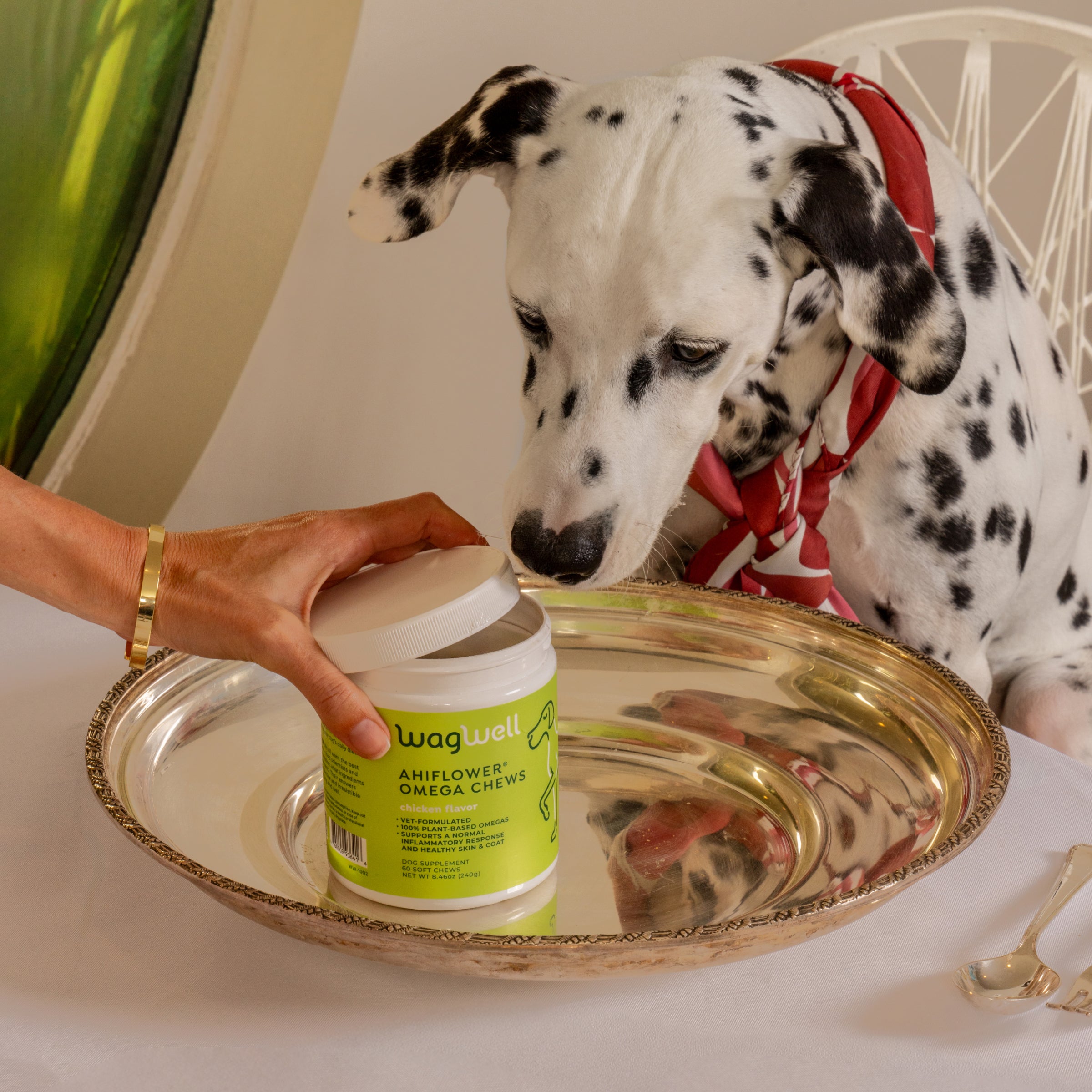
Ahiflower Omega Chews are a daily soft chew, dosed by weight. They contain natural poultry flavor, so check with your vet if your dog has a poultry sensitivity.
For more on skin, coat, and fatty acids, see our dog skin and coat health guide.
Dehydration can leave skin dry, so a steady supply of clean water supports skin health. We found no study showing that drinking more water reduces shedding in healthy dogs, so treat hydration as a foundation rather than a fix.
The AKC reports that the heaviest seasonal shedding usually happens in spring and fall, and that increased hair around the home is normal during these times. Plan extra brushing sessions around these windows:
|
Season |
What is happening |
What to do |
|
Spring |
Dogs lose their heavier winter coats to stay cool |
Brush more often, and use a rake or de-shedding tool |
|
Summer |
Shedding usually settles, though some dogs shed lightly all year |
Keep up weekly brushing, and never shave a double coat |
|
Fall |
Dogs shed lighter hair to make way for thicker insulation |
Add brushing sessions and a pet vacuum for loose hair |
|
Winter |
Indoor dogs with steady lighting and temperature may shed lightly all year |
Keep a steady routine, and watch for dry skin |
Shedding season usually lasts a few weeks to a couple of months, according to the AKC. The calendar above follows the Northern Hemisphere.
Itching or pain is a common cause of acquired inflammatory hair loss, according to the Merck Veterinary Manual, and infections, parasites, and allergies are typical culprits. Keep your dog on year-round flea prevention from your vet, and look into itching before it becomes hair loss.
Some hair loss is not shedding at all. The section below lists what to watch for.
These ideas sound sensible, but they can backfire or simply fail to help.
Shaving does not stop shedding, and it can leave the skin exposed to sun and make the coat grow back unevenly. A double coat helps regulate temperature, so brush out the undercoat instead. This is general grooming guidance, so check with your groomer or vet for your dog.
Frequent baths strip natural skin oils, which can leave skin dry and flaky. Stick with a sensible schedule unless your vet prescribes more.
No supplement makes a dog stop shedding. Omega-3s may improve coat quality over weeks, but they work alongside brushing, diet, and parasite control, not instead of them.
Bald patches, thinning, and irritated skin are not normal. Treating them as ordinary shedding can delay care for allergies, infections, or hormonal problems.
The AKC lists hypothyroidism, congenital coat disorders, and allergies among conditions that can affect skin and coat health. The Merck Veterinary Manual adds that hormonal imbalances such as hypothyroidism, protein deficiency, pregnancy or lactation, and recovery from a severe illness or fever can all cause hair loss. Call your vet if you notice:
Bald patches or symmetric hair loss
Thinning fur, red or irritated skin, scabs, or flakes
Itching, licking, or chewing that does not stop
Sudden, dramatic hair loss, or hair that breaks off instead of shedding
Lethargy, weight changes, or changes in appetite along with coat changes
Brush on a regular schedule with the right tool, bathe sensibly with a shedding-control shampoo, feed a complete diet, and keep up flea prevention. You cannot stop shedding entirely, but these steps reduce the hair that ends up around the house.
According to the AKC, shedding season usually lasts a few weeks to a couple of months, depending on breed, coat type, and factors such as temperature and daylight.
No. Omega-3s may improve coat and skin quality, but they do not stop normal shedding. Studies have measured coat condition, not the amount of hair shed.
No. Shaving does not stop shedding, and for double-coated breeds it can harm the coat. Brushing out the undercoat is the better approach.
Heavy shedders may need brushing several times a week, or daily during peak shedding. Short-coated dogs usually do well with weekly brushing, and more often in spring and fall.
Shedding is excessive if it comes with bald patches, inflamed skin, or a sudden increase in hair loss. These signs can point to a health problem, so see your vet.
Shedding is part of owning a dog, but the hair does not have to take over your home. Brush with the right tool, bathe sensibly, support the coat with good nutrition, and prepare for the spring and fall peaks. If the hair loss comes with bald patches or irritated skin, let your vet take a look.
Sources:
American Kennel Club. “Dog Shedding: What to Expect and How to Manage It.”
Combarros D et al. “A prospective, randomized, double blind, placebo-controlled evaluation of the effects of an n-3 essential fatty acids supplement (Agepi ω3) on clinical signs, and fatty acid concentrations in the erythrocyte membrane, hair shafts and skin surface of dogs with poor quality coats.” Prostaglandins, Leukotrienes and Essential Fatty Acids.
Merck Veterinary Manual. “Hair Loss (Alopecia) in Dogs.”


