


Why does my dog smell like fish when they have not been anywhere near the water? You lean in for a cuddle and get hit with an odor that belongs nowhere near your living room couch. It is one of those smells that stops you in your tracks and sends you straight to the internet for answers. The good news is that a fishy odor in dogs almost always has a clear, identifiable cause. The better news is that most of those causes are treatable once you know what you are dealing with.
Dogs produce some genuinely unpleasant smells as a normal part of their biology. Some of those smells are harmless. Others signal that something needs attention. A fishy odor sits firmly in the second category. It rarely appears without reason, and it rarely goes away on its own. Understanding the most common sources helps you respond quickly and get your dog the right care.
The Most Common Reason: Anal Gland Issues
If your dog suddenly smells like fish, the anal glands are the first place to look. This is by far the most frequent culprit, and it catches a lot of first-time dog owners completely off guard.
According to the American Kennel Club, dogs have two small oval-shaped sacs located on either side of the anus. These glands produce a fluid with a strong, distinctly fishy odor that is unique to each individual dog. Under normal circumstances, this fluid releases naturally during bowel movements. Every dog essentially has their own scent signature encoded in that secretion, which is why dogs spend so much time sniffing each other during greetings.
Problems arise when those glands do not empty properly. The fluid builds up, the glands become impacted, and the smell becomes impossible to ignore. Some dogs also express their anal glands involuntarily when startled, scared, or extremely stressed, releasing a sudden burst of that sharp odor with no warning at all.
Signs of Anal Gland Problems
Watch for these behaviors that point directly to anal gland discomfort:
-
Scooting the rear end along the floor or grass
-
Excessive licking or biting at the base of the tail
-
Straining or visible discomfort during bowel movements
-
Swelling or redness around the anal area
-
Blood or discharge near the rectum
-
A persistent fishy smell that does not improve after bathing
Anal gland issues do not resolve on their own. Impacted glands can become infected and eventually abscess if left untreated. Your veterinarian can manually express the glands, prescribe antibiotics if infection is present, and recommend dietary changes to prevent recurrence. Never try to express the glands yourself without proper instruction, as doing it incorrectly causes pain and potential injury.
Certain factors increase a dog's risk of developing anal gland problems. Soft stools from a low-fiber diet mean less pressure on the glands during defecation, reducing natural expression. Obesity, allergies, and chronic skin conditions all contribute as well. Small breeds tend to experience more frequent issues than large breeds, though no dog is completely immune.
Dental and Oral Health Problems
A fishy smell coming specifically from your dog's mouth points toward oral health issues rather than anal glands. Plaque, tartar buildup, gum disease, and oral infections all produce strong, unpleasant odors that some pet parents describe as distinctly fishy or sour.
According to Laurel Veterinary Clinic, dental problems are a commonly overlooked source of unusual body odor in dogs. Many pet parents assume bad breath is just a normal part of dog ownership. It is not. Persistent bad breath, especially with a fishy or rotten quality, typically indicates bacterial overgrowth in the mouth that needs professional attention.
Regular dental care dramatically reduces the risk of oral health issues. Brush your dog's teeth several times weekly using dog-appropriate toothpaste. Schedule professional dental cleanings through your veterinarian annually or as recommended for your dog's specific needs. Between cleanings, dental chews and water additives help slow plaque accumulation. If your dog's breath has changed noticeably or carries an unusual odor, a veterinary dental exam identifies the source before problems escalate.
Skin Infections and Yeast Overgrowth
Skin infections produce odors that range from musty to distinctly fishy depending on the type of organism involved. Yeast infections, particularly those caused by Malassezia, are common in dogs with allergies, skin folds, floppy ears, or immune system challenges. Bacterial skin infections produce their own range of unpleasant smells that worsen when the infection spreads or becomes chronic.
Montgomery Veterinary Associates notes that skin infections often come with a greasy, malodorous coat that carries the smell throughout the day regardless of how recently your dog was bathed. Dogs with environmental or food allergies are particularly susceptible because chronic inflammation compromises the skin barrier, allowing opportunistic organisms to overpopulate.
Look for these signs alongside an unusual odor:
-
Redness, irritation, or visible inflammation on the skin
-
Greasy or flaky coat texture
-
Excessive scratching, licking, or rubbing
-
Hair loss in affected areas
-
Discharge or crusting on the skin surface
-
Odor concentrated around the ears, paws, skin folds, or groin
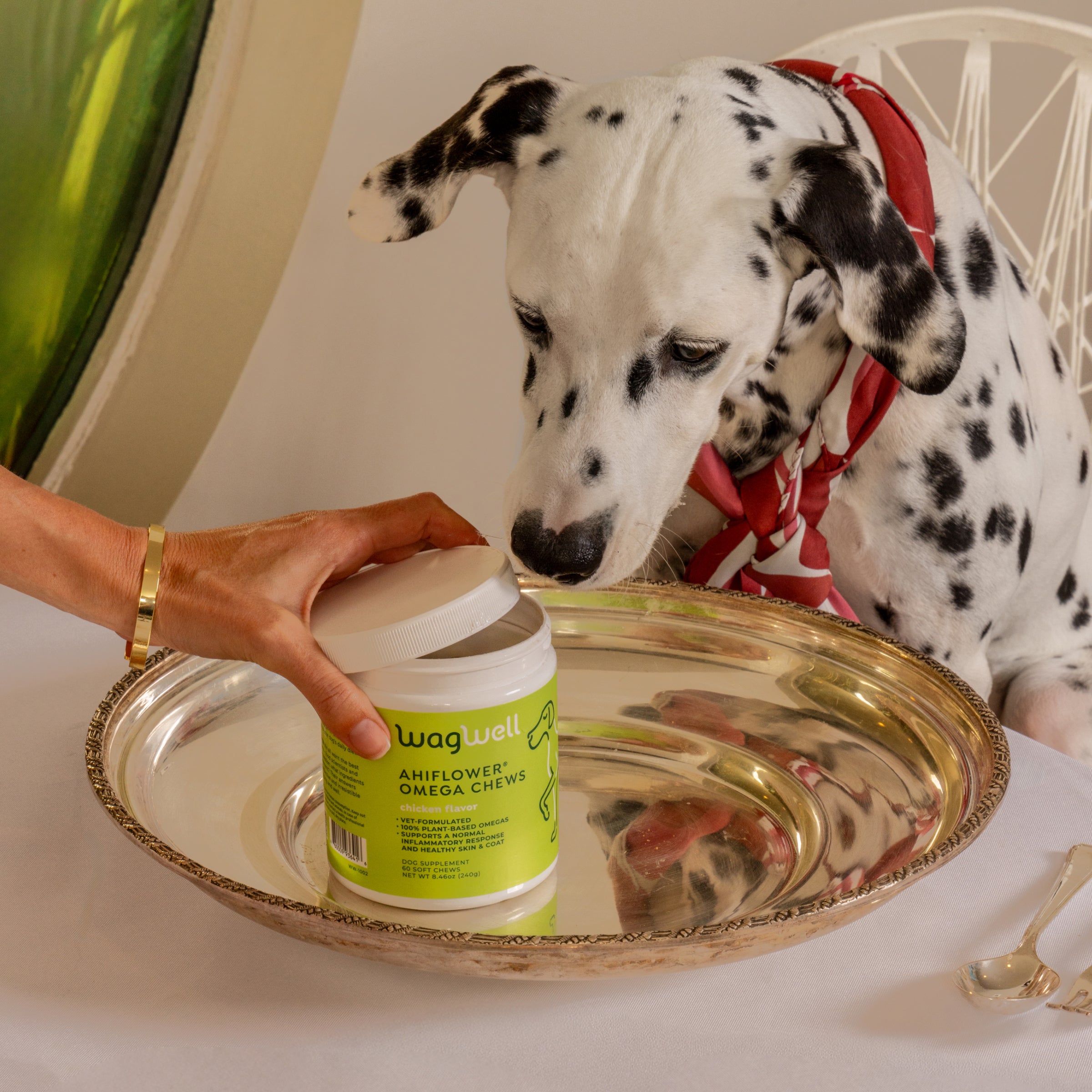
Supporting skin health from within reduces the risk of recurring infections. Ahiflower Omega Oil delivers a complete plant-based profile of omega 3, 6, and 9 fatty acids that strengthen the skin barrier and reduce the systemic inflammation that makes dogs vulnerable to yeast and bacterial overgrowth. Adding it to your dog's daily meals supports healthier skin from the inside out without the fishy smell or digestive upset that comes with traditional fish oil products.
For dogs dealing with allergy-driven skin issues, Allergy & Itch Chews combine colostrum, Epicor, and Ahiflower omega fatty acids to support immune regulation and reduce allergic skin reactions year-round. Addressing the underlying allergy often breaks the cycle of chronic skin infections that produce persistent odors.
Urinary Tract Infections
A fishy smell around the rear end that does not match typical anal gland behavior sometimes indicates a urinary tract infection. UTIs in dogs cause bacterial changes in the urine that alter its odor noticeably. Female dogs experience UTIs more frequently than males due to anatomical differences, though both are susceptible.
Common UTI symptoms alongside an unusual odor include:
-
Frequent urination or straining to urinate
-
Accidents inside despite being house-trained
-
Blood-tinged urine
-
Excessive licking of the genital area
-
Lethargy or signs of discomfort
UTIs require a veterinary diagnosis and antibiotic treatment. Never attempt to treat a suspected urinary infection at home. Left untreated, the infection can spread to the kidneys and become a more serious systemic problem.
Why Does My Dog Smell Like Fish: Grooming and Prevention
Regular grooming helps manage odors between veterinary visits and keeps small issues from becoming larger ones. Bathe your dog every four to six weeks using a gentle dog-appropriate shampoo. Pay particular attention to skin folds, the area around the ears, and between the toes where moisture and bacteria accumulate.
Daily Cleansing Wipes offer an easy between-bath solution for maintaining skin freshness. These certified microbiome-friendly wipes reduce odor-causing bacteria while hydrating and soothing the skin and coat. Wiping your dog down after outdoor activity removes allergens, debris, and surface bacteria before they contribute to skin problems.
Diet quality influences everything from digestive health to coat condition to the regularity of natural anal gland expression. High-quality protein sources, adequate fiber, and essential fatty acids all support the systems that keep your dog smelling clean and healthy. Talk to your veterinarian about whether your current food provides sufficient fiber to support proper anal gland function, particularly if your dog has recurring impaction issues.
Getting to the Bottom of It
Why does my dog smell like fish? Nine times out of ten, the answer is anal glands. The other causes, dental disease, skin infections, and urinary tract infections, all have clear signs that help you and your veterinarian identify the source quickly. None of these issues improve without proper care, and most worsen meaningfully when ignored. A single veterinary visit typically resolves the immediate problem and reveals what changes in diet, grooming, or supplementation will prevent it from coming back. Your dog deserves to feel comfortable, and you deserve a couch that does not smell like a fishing dock.
Sources:
Montgomery Veterinary Associates. When Your Dog Smells Like Fish: Causes, Solutions, and Prevention.
American Kennel Club. Anal Glands in Dogs: Everything You Need to Know.


